The post Building Better Relationships with Students appeared first on Owl Quest.
]]>Do: Show Up for Kids
Whenever possible, try to attend at least one of every type of event your students participate in at school. It matters so much to the kids to see you there. Pick a day that works for you, not a day that will stretch you too thin. Bring your family and make an outing of it if you have family obligations. Make it fun for yourself and allow yourself to have a good time. You don’t have to go to every game, but make it a point to go to one football game, one volleyball game, a choir concert, and a band concert, or whichever activities are most relevant to the most of your kids. Take pictures with your students and make memories.
Don’t: Connect with them on Social Media
Students and teachers on social media do not mix. Even if you have a teacher page, don’t risk it. In fact, many districts don’t allow teachers to interact with students. As teachers, we need to be very careful of our online presence. If a student finds you, don’t allow them to follow you by blocking them if necessary. Just explain to the student later that it is not personal, but you don’t allow any students to connect with you on social media.

Do: Show Interest in Their Interests
Ask students about themselves. Greeting students at the threshold of your room is a great way to do this. I like to ask kids about their drawings. I notice the patterns they choose to wear and ask. For example, from a student wearing a sweater with butterflies often, I asked if she liked butterflies. Her face lit up when she realized I noticed this little detail about her. Find something about the student that can help them feel seen. \
Don’t: Be Someone You Are Not
I’m very different than most of my students. My cultural background is different than most of my students. My music tastes, fashion, and more are completely different than my students. While I try to stay knowledgeable about what they are into, and I honor their experiences and interests, I don’t fake it. If I don’t know about something, I don’t try to pretend to. I let the kids inform me instead. They love having a moment to teach the teacher. The kids respect that I don’t try to be cool to them. I’m dorky. I’m lame. I’m unapologetically and professionally me and they love me for it. How do I know they love me? When we had a fundraiser where students got to purchase tickets to pie a few different staff members, not a single student opted to buy a ticket to pie me in the face.
Do: Discipline with Love
Kids need boundaries. Kids want to know that you are fair and that your expectations are consistent. I like to use CHAMPS to detail out the behaviors I want to see in my classroom from our Do Now, to the I Do, We Do, You Do, and the Exit Ticket. There is no question of what behavior I want to see and I enforce it. I even have rules about student listening posture, called SLANT (Sit Up, Lean Forward, Ask and Answer Questions, Nod Your Head, Track the Speaker). This isn’t my idea, it comes from Teach Like a Champion 3.0 which I highly recommend.
So, what do I do when kids fall short of the expectation? First, I give wait time or say, “I’m waiting for two more” if I have two students not tracking me. I don’t call them out by name, but their neighbors start using positive pressure to get their peers on task. If that doesn’t work, I go to proximity, standing closer to that student. I also use whisper prompts. While I am not perfect at it, I avoid calling out a student in front of the class. It damages the relationship and it turns the situation into a show of you versus a student. If it still isn’t fixing the behavior, I issue a consequence like lunch detention.
Do: Make Positive Calls Home Early and Often
When you start the school year if you’ve taught for at least a year (and maybe even before then), you might get a hunch that a student who is acting correctly now just might become a behavior problem later. Often, these are your energetic kids who crave attention. So…give it to them! Find something that they did well within the first day of two of school. Now this student knows you see them as a good student who makes their life better. Parents love a good call and often reward their scholars for it.
I’ve experienced students who get into trouble in other classes become star students in my class. I think it was in part due to early positive calls home. Not only does it make the kid’s and family’s day, it will your day too.

Building Better Relationships With Students
Building better relationships with students is achievable and not as difficult as you might think. Focus on a few key students a week and watch your classroom transform.
The post Building Better Relationships with Students appeared first on Owl Quest.
]]>The post Math Magic: Must-Have Middle School Math Manipulatives! appeared first on Owl Quest.
]]>
1. Base-10 Block Bonanza: Let’s Build Some Math Muscle with Manipulatives!
Who said math can’t be a hands-on workout? Grab your hard hats because we’re diving into the world of Base-10 blocks – the construction site of mathematical mastery! These colorful blocks aren’t just building towers; they’re constructing a foundation of number brilliance. From adding skyscrapers to subtracting sidewalks, Base-10 blocks make math tangible and totally terrific! You can find some here. I don’t get anything from this link, just making your life easier.

2. Fraction Fiesta with Fraction Tiles: Where Every Slice is a Celebration!
Say goodbye to fraction frustrations and hello to Fraction Fiesta! Our special education stars deserve a front-row seat to the most exciting math show in town, and that’s where fraction tiles steal the spotlight. Watch as fractions become the life of the party, each tile a VIP guest in the grand mansion of mathematical understanding. Spoiler alert: the party favors are a deeper grasp of fractions! I like these from Amazon.

3. Geometric Shape Shenanigans: Shapes That Make Math a Blast!
Get ready to shape-shift your math lessons into an adventure of geometric proportions! It’s a carnival of shapes, and special education students are the ringmasters. From triangles to octagons, let’s explore the circus of geometry together. These geometric shapes aren’t just for show; they’re the backstage pass to understanding the magical world of angles, sides, and three-dimensional wonders! My teachers growing up had sets of these, and I still remember loving getting to use them.
4. Cuisenaire Rods Carnival Extravaganza: Unleash the Rainbow of Math Marvels!
Step right up, ladies and gentlemen, and behold the dazzling display of Cuisenaire Rods – where math meets the rainbow! These colorful rods aren’t just tools; they’re the magical wands that unlock mathematical mysteries. Special education students, get ready to be math wizards as you mix, match, and create number spells that will leave everyone in awe! These are quaint.
5. Number Line Roller Coaster: Buckle Up for a Mathematical Manipulative Ride!
Hold onto your hats because we’re about to embark on a thrilling Number Line Roller Coaster ride! Special education students, you’re in for a treat as we zip, zoom, and zigzag our way through addition, subtraction, multiplication, and division. It’s not just a number line; it’s the roller coaster of mathematical joy that turns learning into a hair-raising adventure! I’ve created a number line math mat that includes a universal problem-solving grid at the top. It’s a great manipulative and graphic organizer for your middle school special education and RTI students. All you need to do is print it (I like color card stock), laminate or put in a plastic sheet protector, and students are good to go!
And there you have it, Math Maestros! The top five math manipulatives that will transform your classroom into a dazzling math carnival. Let’s make math not just a subject but a show-stopping spectacle that leaves everyone cheering for more. Because when it comes to learning, the fun factor is the secret ingredient that turns every special education student into a math superstar!
The post Math Magic: Must-Have Middle School Math Manipulatives! appeared first on Owl Quest.
]]>The post SPED Team Shirts for Back To School appeared first on Owl Quest.
]]>
Maslow Before Bloom

Before our kids can bloom academically, we have to make sure that their physical and emotional needs are met. The easiest way to wrap that up is to simply say, “Maslow before Bloom.” This floral wreath design will help remind you and your fellow educators to put Maslow’s Hierarchy of Needs before Bloom’s Taxonomy.
TEAM SPED Sunflower Arrow Shirt

This cheerful TEAM SPED design with a sunflower arrow will brighten up your day.
Adapt Include Love

Special education teachers adapt, include, and love every single day. This is a great team shirt showing off your SPED Team values.
IEP: I Encourage Progress

Special education teachers encourage progress in their students every day. This shirt features a fresh arrow design with the slogan IEP: I Encourage Progress. It’s a great shirt to wear as an individual or to make an even bigger statement with SPED Team shirts.
Paraprofessionals Make It Possible
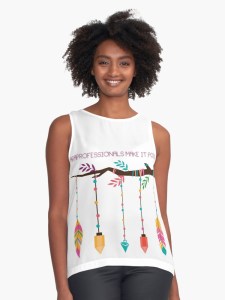
Your paraprofessional team will love these bright and cheerful shirts that say, “Paraprofessionals Make It Possible.” We rely on paraprofessionals to get everything done.
Peace Love Teach

This Peace Love Teach shirt is fun way to show your love of teaching. Get one just for you or for your entire team.
SPED SQUAD

Your school’s sped squad will enjoy matching with in their SPED Team shirts with this modern and fresh design.
Stickers, Mugs, and More
If you don’t need shirts, but like the designs you see, you’re in luck. All of these designs are available on magnets, stickers, mugs, and more. The stickers are great to jazz up your water bottle and the magnets are perfect to bring some life to your file cabinets. You can find all my teaching designs right here.

While you’re thinking about back to school, don’t forget other back to school essentials like preparing your classroom’s emergency go bag.
The post SPED Team Shirts for Back To School appeared first on Owl Quest.
]]>The post Preparing Special Education Students for an Emergency appeared first on Owl Quest.
]]>These days, teachers often already have emergency go bags for things like fire drills, but preparing special education students for an emergency goes beyond a fire drill go bag. Don’t have one yet for your classroom? Learn how to make one here!
I’ve lived in the Houston area for over a decade now. In that time frame, I’ve evacuated my home because of wildfires, I’ve been stuck at home for a week from Hurricane Harvey, seen my old apartment building on TV from historic flooding, and have now just gone through the awful ice storm. The last school I taught at even had students stranded at school overnight due to flooding, though I wasn’t teaching there at the time. My very first year teaching, my school had a real lockdown situation with someone with a gun outside the school. Thankfully, that situation turned out OK.
But that’s just my personal experience. Beyond myself, a first responder friend had to help in the West, Texas explosion a few years ago. Just this morning I learned about a train explosion in Cameron, Texas, where a different teacher friend of mine used to live and teach. That explosion caused evacuations due to health concerns. While I don’t want to cause you panic or even more anxiety, we do need to plan for more emergencies to come.
Houston specifically and Texas in general have had a ton of disasters. Learn from us. They can happen anywhere. I want your special education students to be well prepared in case of an emergency.
Assess Your Likely Threats
Natural Disasters
The first step in being prepared is to consider what types of threats are likely in your area. What natural disasters are likely in your town? While unlikely events can certainly occur, it is better to start your preparations with more likely scenarios.

Floods
Is your school near areas that flood in heavy rain? Don’t just think about the school, think about how the school is accessed via roads. Can busses come and go safely or will the roads be under water? The school I taught at that had students and staff stuck in a flood was fairly rural so there weren’t a ton of roads in and out. While the school was on high ground, the surrounding roads were not, turning the school grounds into an island. Unfortunately, that meant some students and staff were stranded overnight. How would you make your kids feel safe if the power was out, and they couldn’t go home? For so many of our students, routine is critically important, but emergencies are anything but routine.
Wildfires
In 2011, I got a phone call I’ll never forget. It was the weekend, and I was watching Walk the Line. Just a normal, relaxing day. A friend called and immediately asked if I was OK. I said yes, but asked her why. While I had been watching a movie, a wildfire had started near my home. I immediately started packing up important items to my car so I could leave if needed. The air outside was already smokey. Soon, I was at the very edge of the mandatory evacuation zone, so I left to stay at a friends for a week with my cats.
If I had happened to be closer the wildfire, I could have lost everything very, very quickly. While often there is some notice of a spreading wildfire coming your way, if your school happens to be nearby a breakout of a wildfire, that’s going to be a big problem. Does your school have a plan to evacuate quickly with buses? It’s not remotely the same situation as a normal fire drill.
Extreme Cold and Ice Storms
I’m a Texas girl, but my parents are from South Dakota, so I’m no stranger to cold. Spring Break to me meant visiting my grandma and playing in snowdrifts, not sunny beaches. If you live somewhere where cold temperatures are possible, does your school have a backup plan for heat? If kids are stranded there and cold overnight, do you have a way to keep kids warm? Mylar blankets are relatively inexpensive and small to store. Nobody in Houston would have guessed that we would have such an extended cold snap at the same time as a power outage. It was not good to experience. People died from cold exposure. Thankfully the schools in my area closed well before the storm, but if they had been wrong in their prediction, it could have been even worse.
Climate Change
Climate change is creating new hazards in areas that didn’t previously experience them and making disasters more frequent. This isn’t just a future problem, climate change is here and impacting us right now. Learn from local natural disasters but consider the possibility that your area may experience new or unusual threats as well. Part of our disaster planning should be disaster prevention. We can teach our students to contact their representatives to prevent and prepare for disasters.
Accidents
Explosions
Explosions happen more than we like to think about. They can happen from improper chemical storage, train wrecks, or other industrial incidents like the explosion in Houston a little over a year ago. With these kind of events, you may need to evacuate or shelter in place. Depending on the materials available, having masks available to students to help filter the air could be wise. Even post-covid, it may make sense to have masks on hand for students and staff, just in case.
Infrastructure Failure
Do you take a bridge to get to and from school? A tunnel? A road that could be washed out? In 2007, the I-35 Mississippi River bridge collapsed. Almost 9% of US bridges are “structurally deficient,” and our infrastructure all too often isn’t being repaired. Take a look at a map of the area surrounding your school. How many ways in and out are there? Has the transportation department of your district looked at this issue? And are they prepared with enough accessible buses to help students with wheelchairs or other students with IEPs requiring accommodations in transportation?
Injuries
While your school nurse(if your school is even lucky enough to still have one full time) should be able to handle many injuries, it’s a good idea to have first aid knowledge yourself. Ask around and find out what first aid materials are available at your school and get trained in first aid. I recommend you have some tourniquets at your school. While it sounds dramatic and conjures up images of school shootings (which of course is a horrific possibility in this day and age), tourniquets are more often going to be needed for freak playground accidents causing open fractures, also called compound fractures to stop bleeding before EMS can arrive.
Heart Attacks
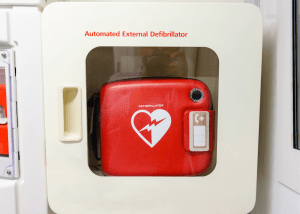
Heart health is near and dear to me. Both my parents lost their fathers to heart attacks, and I lost my childhood second dad to a heart attack too. If your school doesn’t have at least one defibrillator, it should. I’d love to see one in every front office/nurse clinic and also in every gym and sports field house. Minutes and seconds matter in a cardiac emergency. When I was in college, I was a member of Texas A&M’s Circle K International. We would do defibrillator demonstrations and CPR demonstrations outside of Kyle Field on game day to raise money for defibrillators for schools. Do you have a Key Club, Builders Club, or other civic service organization that could help raise funds for this important gear if your district can’t provide it?
Maslow’s Hierarchy
We already know our students can’t Bloom without Maslow. When planning for an emergency at school, we need to consider his hierarchy too. We need to think about our students basic needs first. We need to consider how we will meet these needs in an emergency.
Basic Needs
I’ve heard it said that nobody has special needs. We all have the same human needs, and some of us just need accomodations to make that happen. This is a really helpful mindset to consider in how to prepare for an emergency situation with our students who need accommodations to get their basic needs met. You should consider all activities of daily living, even ones that are normally handled at home. Not only will this help you plan for emergencies, but this exercise can help you think about how to increase student independence for future.
Rule of Threes
Maslow’s Hierarchy meshes well with the Rule of Threes. The rule of three is a way to help remember basic survival needs and how much time you have for each need.
- Air: 3 Minutes-A person can survive without air for about three minutes.
- Shelter: 3 Hours- A person can survive harsh conditions without proper shelter
- Water: 3 Days-A person can survive without water for about three days.
- Food: 3 Weeks-A person can survive without food for about three weeks.
These generalizations may be different for students with certain disabilities.
Air
Do you have a student who has an electricity powered device to help deliver oxygen? If so, how will you keep them going without electricity? Alternatively, consider a student with cystic fibrosis. At home (and perhaps at school too), kids with cystic fibrosis have medical devices that help clear their lungs. If a student can’t go home, how will staff make sure the child can breathe?
Shelter and Temperature
Do you have students who have difficulty regulating their body temperature? Without power, how do you intend to keep these kids warm or cool, depending on the situation? For students who aren’t able to regulate their body temperature, the three hour rule above could be far less. Have a plan that can be implemented quickly. Body temperature isn’t just a matter of comfort; in extreme weather, it is life and death. Even students with no medical issues will need to be able to stay warm enough and cool enough in an emergency.
Food and Water
Do you have a student who accesses food and water through a feeding tube? How about a student who gets their food prepared with a blender? If you are without power, how are you going to provide for these needs? While the rule of threes may give you more time to handle food and water than air and temperature/shelter needs, for some of our students, their bodies could be in an emergency state far before three days without water or three weeks without food.
Medicine
The rule of threes promoted by survivalists doesn’t take medications into account, but it should. Some medicines need to be administered very regularly for survival.
Some medicine needs to be kept cold. If this applies, do you have a way to keep the medicine cold even in an outage? Sometimes our students may have medicine they take before an after school on a 12 hour rotation. Some students may need insulin. The types of medication needs are extremely varied. Get a plan for emergency storage, administration, and even evacuation if you can. If you have multiple students needing refrigerated medications, remember opening up the fridge in a power outage will warm up the inside more rapidly.
Remember, some students who need medicine may not specifically fall under the special education umbrella, but they shouldn’t be left out of planning. Also, if you have to evacuate the student body, how are medications being evacuated safely with kids?
Emotional Needs
Our kids thrive on routine and predictability, but emergencies don’t lend themselves to that. If you can, in an emergency situation where students are staying after hours, try to have be near staff members they are most comfortable with, while being fully and discretely included. Make the situation as pleasant and fun as possible. It’s not the time to knock out extra academics.
Kids stranded at school miss their families. They might be afraid of the dark. The weather could product scary noises. Everywhere students and staff will be should have some emergency lighting. After dark, you can’t rely on sunlight. Have lanterns for general lighting. I use headlamps for camping. They are hands free and very helpful too. Enough battery operated light helps everybody feel a little more secure.
Stuffed animals and fun sensory toys can be helpful to have on hand in an emergency. In an emergency, it’s OK to bust out the preferred activities. Make it a point to know your students preferred activities that don’t rely on technology. Not only will this help students stay entertained in an emergency, it can help in day to day classroom management too.
If possible, have an idea of your students routine at home after they get home from school. Is there anything you could easily recreate in their home routine to keep them at least closer to their routine in an emergency?
Group Activities and Inclusion
In an emergency I believe special education students should still be included to the greatest extent possible that is their LRE. In a situation with stranded kids, large groups of kids can congregate in the cafeteria or gym. What kinds of activities will your school plan for such an event? Ideally these activities should be easily to modify and allow for all students to feel successful and calm. The point here is comfort and entertainment, not academics! Preparing special education students for an emergency means preparing to have them fully included with same age peers.
I assure you kids are learning during an emergency, and some of those lessons are going to be more important than a bit of academic review would be. They are learning from how you and other staff members react. They are learning about community and teamwork. Even in an emergency, you are still modeling as a teacher.
Technology
The internet could go down in an emergency, landlines, cell phones, or a combination of those. Don’t have your emergency plans and records in a digital only format. You’ll be so glad you have a physical copy if you need it.
School Records
Besides teaching, I’ve also worked in the data center industry, which included disaster recovery. In that job, I toured school district owned data centers flooded out. All those grades entered down the drain. If you can, keep a fairly recent record of the grades you’ve entered printed out. While I don’t love printing things unnecessarily, you’ll be really, really glad to not completely loose that work if your district looses their records. It can and does happen. Also, you won’t want to rely on electronic copies of an IEP if the internet is down. Have a way to access it manually as a backup. Just make sure you store it properly to protect privacy.
Communication
If possible, have a way for students to communicate with their family during an emergency. It may mean using your own cell phone. That little bit of home and comfort can be a big help to our kids hearts. It won’t always be possible if communication lines are down, but sometimes it can be done. Make sure you have ways to access phone numbers that are not only digital. A charged phone bank allows students (and you) to make calls and keep communication open for a bit longer.
Preparing for a School Emergency
Preparing specifically for special education students in emergency situations is absolutely vital. It can save lives. No school is invulnerable to an emergency. While it isn’t easy to think about, you will feel a sense of peace once you have prepared.
The post Preparing Special Education Students for an Emergency appeared first on Owl Quest.
]]>The post What is Stress-Free IEP? appeared first on Owl Quest.
]]>‘Twas the night before an IEP, when all through the house
Just one teacher was stirring, with a click of the mouse;
The PLOPs were edited and revised with care,
In hopes that the student’s strengths would be there;
The goals were half written, dancing around in her head;
While rubbing her eyes that were blotchy and red;
While the teacher was in PJs, and a cat in her lap,
She wished to go to bed, just even a nap,
When Windows Update started to chatter,
She burst into tears because her kid’s goals matter.
Away from the computer she flew like a flash,
Tore open a tea packet and found her chocolate stash….
You Deserve Better
It doesn’t have to be that way. You can get your IEPs drafted ahead of time so you won’t be up late before hand. You can have a system to know that you wrote everything to the best of your ability. At the end of the IEP meeting, the team CAN come out with a great document that is going to make a real difference for your student’s progress.
How? With Stress-Free IEP: The Path to Powerful IEPs.
Stress-Free IEP is an online course you can take in the comfort of your own home in your own time. With Stress-Free IEP, you’ll learn how to systematize your data, write goals that make an impact, and manage your time for IEPs effectively.
Stress-Free IEP is for you:
- especially if you are a newer special education teacher looking to get a solid foundation on IEP writing.
- if you want your students to have awesome IEPs that unlock their abilities.
- even if you’ve been writing IEPs for a long time because the course includes newer ways of creating effective IEP goals.
- even if you’re not a special education teacher. General education teachers will benefit from understanding the legal requirements of the IEP and will be better prepared to make the most of their presence in the IEP meeting.

What is Stress-Free IEP?
Stress-Free IEP is the course that is going to save you time and stress while allowing you to make a great impact for special education students. Easy to use handouts allow you to go through out the modules and practice your new IEP skills.
The course takes about 3 hours to complete online. Short modules let you take the course in small bits of spare time. Upon completion of the course and quizzes, you’ll receive a certificate of completion for the course.
So what is Stress-Free IEP? Is that path forward for you to write powerful IEPs that make an impact for your students while still allowing you time for family and friends.
Learn more about the course by clicking here!
The post What is Stress-Free IEP? appeared first on Owl Quest.
]]>The post Six Ways to Make Sure Your IEP Goals Will Be Impactful appeared first on Owl Quest.
]]>1. Make a data sheet
Before committing to a goal in an IEP, create a data sheet for yourself. Take data on the draft goal using your data sheet. Not only that, but if a paraprofessional will be responsible for taking the data, let them work on taking data for the goal. Are you able to take the data quickly? Is the data truly reflective of the activity being measuring? Does the data have to be collected in a certain setting or do you have flexibility in the setting?
2. Consider Distance Learning
With our new situation, it’s wise to consider making as many goals as possible compatible with distance learning as we can. Some goals, especially behavior goals, don’t lend themselves to distance learning. Children often exhibit different behaviors in different settings. However, many academic goals can be written in ways that give you flexibility to measure the data in person or via digital means. If you have potential goals for students that can be written for digital and in person data collection, I strongly recommend you do so. We have to start thinking of new ways to make sure your IEP goals will be impactful.
Things to consider:
- Handwriting IEP goals could be difficult for distance learning. Is typing a more appropriate skill for the student? How much typing (and phone texting) will your student be doing in the future compared to handwriting? Handwriting is important, but typing is also an essential communication skill.
- Behavior goals can include goals about remaining in the classroom, staying in a particular space in the class, refraining from a certain activity (biting, hitting, etc). It’s hard to take data on remaining in the classroom when nobody is in the classroom. Behavior goals are some of our most important goals because solving behavior troubles can make a giant difference in quality of life for our students and their families. You’ll need to discuss in the IEP meeting what behaviors are happening both at school and at home. There aren’t easy answers on how to address this, and plans should be individual based on student needs.
- Life skills goals can be really difficult to measure remotely. For example, I’ve had students before with goals related to hand washing. To measure this behavior remotely, you’d need really involved family members that can accurately take data, including prompt levels. Imagine having to do a video call with a student from the bathroom sink to measure hand washing! These types of goals are essential and merit a discussion in the IEP meeting about how to address these needs during periods of distance learning.
3. Check your action verbs
Read your draft goals and highlight your action verbs. Can you take a video of the action, a picture of the action, or act out the action? If someone else read the goal, would they act out the same behavior you did, or do they have room for a different interpretation? Think of your IEP goals like stage directions. You want your actor to know exactly what to do during the scene. Similarly, your student and any other professionals need to know exactly what the student needs to do to be successful.
Looking for action verb inspiration? Get my FREE list here.
4. Consider prompts
Once you have your verbs dialed in, it’s time to think about prompts. Some students will need prompts to be successful at a goal, and that is OK. But eventually, they will need to be able to do the work independently. Your goal should include information on how many prompts and what type of prompting is allowable. Your data sheets should include space to track prompts. If a prompt isn’t included in the goal (and isn’t elsewhere in the IEP), if you are prompting the student, they are not being successful at the goal. Consider carefully what prompts your student needs or doesn’t need, consider how to fade prompts over time, and consider how prompting data can be efficiently tracked for the goal. The less prompts you allow, the more impact the goal can have on the student’s independence.
5. Get a second opinion
After you have checked your action verbs and prompts, have someone appropriate on the IEP team review your draft goals before sending them out to family for review and before the IEP meeting. Ask them to restate what the IEP goal means to them. Are you on the same page? If they report something back that isn’t exactly what you had in mind, you need to revise the goal for clarity. Anybody reading the goal should be able to understand exactly what the student will be doing.
6. Consider Assistive Technology
Assistive technology should always be considered for a student in their IEP to help them be successful at their goals and in school in general. Your student might benefit from an AT assessment. AT can be high tech or low tech. Sometimes, AT can be something simple and low tech like a tilted writing board and a pencil grip to help with motor function while writing. Even if you aren’t working on a handwriting goal, this type of assistive technology can help a student become more successful across the board by reducing the frustration of writing answers in any subject. AT might be really high tech like electronic communication devices. Even adding extensions to a browser can be part of AT. AT should always be a consideration for your students. How can tools and technology make a difference in accessibility and success for your kids?
Ready for the Meeting
After you’ve taken the time to carefully craft your draft, you’re ready to send the draft goals to the family. They get input too. Districts across the country have different rules and regulations on this, so make sure you are following the guidelines of your Local Education Agency (LEA) on this. Parent input can help make goals even better and help ensure that the goals are going to be relevant for your student for a long time because it will be relevant in home, not just in school. Following these 6 ways to make sure your IEP goals will be impactful will help you have a smoother IEP meeting and will help make the entire IEP year more effective for your student and easier for you.
The post Six Ways to Make Sure Your IEP Goals Will Be Impactful appeared first on Owl Quest.
]]>The post Back To School Must Haves For Distance Learning appeared first on Owl Quest.
]]>By the way, the items in this article are NOT affiliate links. I’m not making any money recommending them.
Web Camera
If you’re teaching from a laptop, you might already have a built in camera. But often the way that we sit with our laptop puts the camera right up our nostrils. And unless your lesson involves counting nose hairs or bats in the cave, that might not be the angle you want. I have a simple web cam that rests on top of my computer monitor. I can move it around or place it on something even taller to get those coveted MySpace angles. This isn’t the one I use (my husband bought one for me), but if I were about to buy one, I’d get this one.
Ring Light
Lighting matters when on camera. A ring light can help make sure you really are putting your best face forward. You’ll avoid shadows. Your students will be able to see your facial expressions more clearly. And if you’re teaching phonics or speech, your students will be able to see the movement of your mouth more clearly.
And for pure vanity purposes, ring lights can make you look fantastic.
Document Camera
A document camera can come in really handy to show students how to do something on a print out. If you’re working on handwriting skills, doing a screen share just won’t cut it. I don’t have a specific recommendation on these and they can be pricey. I’ve seen some brilliant teachers repurposed their phone by adding their phone as an additional person to an online meeting. It’s OK to get creative!
Green Screen/Backdrop
Don’t have the set up to put a wall behind you? Get a backdrop or a green screen. My teenager has a green screen he’s used for streaming on Twitch, but it could be used for all sorts of fun effects for your class. This would be especially awesome for teaching about different locations. Learning about ancient Egypt? Teach in front of the pyramids! French teacher? Teach in front of a Monet or the Eiffel Tower. Art teacher? Hello Starry Night background.
Screen Share Extensions
I have both Loom and Screencastify Chrome Extensions. I’m still testing both out. Right now I like Loom slightly better. The only trouble I had was getting it to pic up my microphone. I just needed to set up a setting allowing it to access my mic. No big deal. Both of these extensions allow you to pre-record a screen share session. That means you can edit for clarity, and you don’t have to teach it live. Kids can rewind the video and go back over something they didn’t catch. So much better than repeating your instructions over and over and over.
High Speed Internet
Your internet provider is going to need to be able to keep up with the demands of online teaching. In my homes, teachers will be streaming to their classes, while their own children are logging in to their own live classes, while their spouse is logging into a work zoom meeting. Can your internet handle that without getting the hiccups? If not, you might need to look at updating before it becomes an issue.
Celebration Objects
Confetti String
Celebrate a win with your students by throwing this stuff up and down in front of the camera. Will it feel silly? Yes. But it will also delight your kids. We need to up our animation when we are separated from our kids through screens.
Kazoo
You know how kids love everything and anything annoying? Celebrate them with a kazoo!
Party Blower
These make fun noises too with the fun visual element. Point it right at the camera to catch kids attention. Eyes are hardwired to notice things traveling towards our face. It gets engagement in a fun way.
Balloon
Use balloons to celebrate. Have them watch as you blow up the balloon in celebration. You could even get a Pet Net behind you to collect the balloons. Maybe when the net is filled and balloons start falling out the class could earn a special online surpise. It could work a lot like the marble jar classroom management strategy, but bigger and brighter to make an impact online.
Signs
Make fun signs with phrases or visuals like, “Awesome,” “Yes,” and “Way to Go.” You could even incorporate some of your students favorite interests and characters in your signs.
You can get all of these little celebration back to school must haves for distance learning online from a party store inexpensively. They can really help make a difference in engagement and help make the experience fun for kids and you.
Welcome Package
If your district allows it, send your students a little welcome package. You can mail them a letter with a sticker and maybe a pencil letting them know how happy you are they are going to be in your class. These little relationship builders are going to be important. When schools closed last year, it was with established classes where relationships had already been built. While it’s difficult to create relationships this way, it is an essential skill that our students are likely to use in the workplace one day anyway. I’ve had business meetings with people all the way in Australia before myself. Online relationship building is part of our kids future, so model it well.
You don’t have to have all of these things to do a great job teaching online. But they are handy to have on your wish list to make your online teaching smooth and effective.
Do you have some back to school must haves for distance learning that you don’t see here? Share them with our Facebook community.
The post Back To School Must Haves For Distance Learning appeared first on Owl Quest.
]]>The post Should We Go Back to School During COVID-19 appeared first on Owl Quest.
]]>As educators, we are constantly told to make data based decisions. The call to open schools as the number of cases continue to increase defies data and logic. When teachers are required to make everything we do data based, it’s reasonable to expect that those who lead us also make data-based decisions.The United States on the whole is not ready to open up schools to in person learning. Here’s a breakdown of why, considering COVID-19 by the numbers in schools.
Children and Teens Have Risk Factor Conditions
Calls for students to return to school include phrasing about how kids who don’t have pre-existing conditions aren’t at much risk from COVID. That’s perhaps reassuring for many families, but we need to think and plan for kids who DO have pre-existing conditions. Failure to take them into consideration in the planning stages is discrimination. As a special education teacher, I’ve worked with kids for whom COVID-19 could absolutely prove fatal. There are numerous diseases that may cause more severe COVID-19. Here are just a few of those diseases along with estimates of how many kids are impacted by them.
Many Kids Have Conditions that Increase Their Risk
- Asthma (1 in 12 children) Source
- Obesity (18.5%) Source
- Type 1 Diabetes (1 in 400) Source
- Type 2 Diabetes (3,700 new cases per year in kids) Source
- Sickle Cell Disease (about 1 in 500 in Blacks and 1 in 1,000-1,400 in Hispanics) Source
- Kidney Failure and End-Stage Kidney Disease (9,800 kids) Source
- Cystic Fibrosis (30,000 children and adults with an average life expectancy of 37 years) Source 1 and Source 2
- Cerebral Palsy (about 500,000 kids) Source
- Down Syndrome (about 1 in 1,000 kids) Source
- Cancer (about 15,780 kids) Source
- Chronic Heart Disease (“As common as autism”) Source
- Pregnancy (18.8 births per 1,000 teen girls) Source
- Autism (1.6% of 8 year olds, may increase risk) Source
Making Grim Predictions
When we teach reading, we ask students to make predictions. We build this skill in children with reading and math so they can make informed predictions when they are adults. Let’s use our prediction skills along with our data interpretation skills to get a better idea of what we are facing if schools completely open. This prediction is based on all schools opening up back to all students. I know many schools are giving virtual options, which is wonderful to help control the spread of this disease.
Known Facts
- In normal circumstances, about 56,000,000 kids go to public and private school in the US.
- In normal circumstances, there are about 3,700,000 teachers in the US.
Emerging Data For Children
- The best information I could find indicates a 0.69% fatality rate in children who contract the virus.
- This number may change as more children come out of at home social distancing and more data becomes available.
Emerging Data for Adults
We don’t know the true infection rate, so all these numbers in my chart are somewhat speculative. However they are based on available data. Case Fatality Rate is not a great number for understanding pandemics. The preferred measure is the infection fatality rate, but that number is not yet available. It’s estimated currently to be between 0.6% and 1%.
How Many People Might Contract COVID-19
There are different estimates of what percentage of the population will contract COVID-19 eventually, without a vaccine. I’ve seen the number estimated to be between 56 to 81%of the population.
- Low Estimate: 56% of the population
- High Estimate: 81% of the population
In my graphs, I have highlighted in yellow the data ranges I think are most likely based on current data and estimates from scientists. Based on currently available data, I think the most likely infection fatality rate (IFR) will be between 0.6%-1% for adults. Without a vaccine in place, I am using a range of 55%-80% to correspond with the estimates of 56% to 81% of the population contracting the virus. I’ve highlighted in red the worst case, which also isn’t likely. In green, I’ve highlighted the best case scenario which is also pretty unlikely. I included a full range of numbers to offer comparison and allow us to imagine various scenarios more easily. Unfortunately, we must use new data because the virus is so new, but that also means it isn’t yet reliable. That means our leaders should be considering ranges of outcomes.
Graphs to Examine the Key Question: Should we go back to school during COVID-19

- * The 0.09% figure is from the CDC saying that the rate in children is “less than 0.1%.” I have not found data on a more specific number.
- ** The .01% figure is an arbitrary number I choose for a low point of comparison.

Analysis
Best Case Scenario
In the unlikely best case scenario, my analysis predicts that 280 children will die and 1,110 teachers will die. During the 2019-2020 flu season, for comparison, 185 children died of flu. Even in the best case I can predict with only 5% of students contracting COVID and a low fatality rate of .01%, we are likely to experience more deaths in children than in a regular flu season.
Worst Case Scenario
Before you read the worst case, remember that this is very, very, very unlikely. These numbers assume every single teacher and student will contract the virus and that the fatalities are at the highest rate I could find. In this doom and gloom scenario, 386,400 students and 266,400 teachers die. Yikes, but remember, it’s not likely (just as the best case isn’t all that likely either).
More Likely Range
For students, I think the likely range of fatalities if we open schools completely in person is likely to be between 25,200-40,000 students. For teachers, I think the range of fatalities if we open schools is likely to be between 12,210 and 29,600 teachers. This is assuming an 0.6%-1% fatality rate for adults who contract COVID-19. It also assumes that 55% to 80% of teachers will contract the virus. These numbers are total. They aren’t over a specific school year, and they assume a complete opening of the schools.
Consider these numbers. Should we go back to school during COVID-19 if 280 kids and 1,110 teachers will die? Even under the best scenario, that’s so many lives gone.
Children and Teachers Aren’t the Only Ones in Schools
When children return to school, adults have to be on campus too, and not just teachers. Think about who children will be directly or indirectly exposed to at school.
- Cafeteria staff
- Custodial Staff
- Nurses
- Nursing Aids
- Paraprofessionals
- Secretaries
- Bus drivers
- Principals / Vice Principals
- Counselors
- Speech Pathologists
- Specialists
- School Psychologists
- Physical Therapists
- Occupational Therapists
My predictions don’t take any of these professions into account. Many of these professionals work in close physical proximity to students or to potentially infected surfaces. They will be impacted and will experience fatalities as well. We can’t leave them out of planning. They are not invincible, and they should not be invisible either. Should we go back to school during COVID-19 without thinking of how these professionals will be impacted?
Other Illnesses
When schools open back up, schools won’t be dealing with one illness. Kids and staff get colds, strep, flu, and stomach bugs. All of which share symptoms with COVID-19. The novel coronavirus is going to change how we respond to those illnesses too because of the necessity of protection. That response is going to be disruptive to learning.
More Questions than Answers
- Are kids and teachers going to be kept home for 2 weeks if they have these symptoms?
- Will everyone have to get a safe to return note for every illness?
- Who’s paying for those visits?
- What happens when a family doesn’t have insurance to go to the doctor?
- If an elementary kid gets two colds a semester, does that mean they will have to miss 8 weeks of school?
- How will parents navigate sudden weeks-long disruptions to their work schedules?
- Who is going to substitute for low pay and high risk for sick teachers?
- When subs aren’t available, how are teachers going to combine classes and maintain social distancing?
- Are teachers going to get extra sick days to accommodate staying home if showing any symptoms? We know teachers often come to work sick because of lack of subs, etc.
- What happens if the school nurse gets sick and is out for a long period of time?
- How many cases in a school will cause the school to shut down? And for how long?
- How are schools protecting the 24% of teachers who are higher risk with COVID?
Things We Don’t Know About COVID-19
COVID-19 hasn’t been around long enough to know the long term impacts. There are many possibilities without answers.. We do know that fatalities aren’t the only issue with COVID-19. Many patients experience long-term health problems as a result of COVID-19.
- Will the virus cause birth defects (like Zika, rubella, CMV, and others can)?
- Does the virus lay dormant and cause other problems (like Chicken Pox can cause Shingles many years later)?
- Will the virus cause cancer (like HPV, Hepatitis B, Epstein-Barr and other viruses do)?
- Does the virus trigger auto-immune disorders (like measles, mumps, and rubella can)?
- Will the virus reduce fertility (like flu and mumps can do, even temporarily)?
- How long will lasting effects of COVID-19 take to resolve? Or are they permanent?
Things We Do Know About COVID-19
- If our hospital system becomes overwhelmed, death rates will increase due to lack of care availability.
- Masks help reduce spread.
- Staying home helps even more.
- Research is suggesting that immunity could be gone in months following infection. Multiple infections are looking possible.
- Asymptomatic people can transmit the virus meaning once we know someone is infected, it’s already too late.
Things We Know About Kids
Kids need structure and routine. A school year interrupted by multiple quarantine periods is the opposite of structure and routine. While no situation is going to be great for parents, especially for parents in more difficult financial situations, scrambling to make last minute plans could be more of a detriment to the family than having the ability to plan for distance learning consistently. Kids, parents, and teachers will be spared the anxiety of wondering if and when their school will be shut down. They will be spared the constant anxiety of exposure to the virus.
Kids are germy. They lick weird stuff. They don’t always follow directions the first time. Then they test boundaries and limits. Young children don’t yet understand the finality of death and thus can’t comprehend the seriousness of the situation. They will not fully grasp the why of hand washing, mask wearing, and not playing with their friends. We can’t expect kids to be good at following life saving measures. Our youngest students start in PPCD at the age of three. In my opinion, we are asking kids to take on developmentally inappropriate responsibilities.
Based on these numbers, many students will go through the loss of a teacher or peer. It will be traumatic for kids (not to mention the adults). Schools are already preparing form letters for such events. We shouldn’t be going back if a form letter like that is necessary.
So, Should We Go Back to School During COVID-19?
I’m not a doctor or an epidemiologist. That said, teachers are asked to make important decisions, even decisions on life and death matters for kids regularly. We use data to inform everything we do. Teachers and students aren’t just numbers. They aren’t expendable. It’s critical that leaders who control the opening of school be expected to use data and compassion to inform their decisions.
I’ve seen teachers online asking about making wills, and I’ve seen reports of HR departments offering training. I’ve had teacher friends describe their feelings like they have been drafted for war. Other teacher friends are looking to take a leave of absence to protect their health and that of their families.
Should we go back to school during COVID-19? Our country is in a long term emergency situation. There are no good options. So let’s pick a bad option where less people die.
PS. If you’re lucky enough to get to do distance learning, here are some Chrome Extensions to recommend for your families.
The post Should We Go Back to School During COVID-19 appeared first on Owl Quest.
]]>The post 10 Soothing Activities for Special Education Classrooms, Even During Social Distancing appeared first on Owl Quest.
]]>Individual Soothing Boxes
Before we dive in, I want to talk about creating individual soothing boxes for your students. You may have already heard of creating individual reward boxes for your students and right now it’s going to be a good idea to do individual soothing boxes in addition to reward boxes. You may already have a Calming Corner, a calming space. Just a note, this space is NOT a time out. Students should request to go to the space because they know it’s what they need to do to calm down. The idea of a Calming Corner is to prevent behavior escalation. A common Calming Corner that may not be possible this year because of sanitation requirements. Instead, we’re going to take that same idea and break it down for individual students. Instead of making it a shared space with shared materials you can make individual boxes with individual items.
Individual Soothing Items
Coloring Pages
The first thing that you can include in the box is some basic coloring pages. You can tie these pages to what you’re working on in school right then or you can have it just be a pretty design. I actually use coloring pages myself at home with coloring pencils, and I find it to be a soothing activity. When you’re looking for pages, don’t forget to yourself.
Fidgets
The second idea is to have individual fidgets in the soothing boxes. You can buy them on different places like Amazon or anywhere online really. They come in little bags of fidgets. This way you can distribute them and not have to pay individually for a group of fidgets. Distribute them between the boxes based on which ones you think will serve each child best.
Squish Toys
I think that is a good idea to include sensory toys especially what I call squish toys. I find at Walgreens and CVS drug stores in the children’s area. These little plastic, rubbery toys contain air inside. Some of them look like animals with cute eyes. They come in all different shapes and bright colors. Little soft spikes cover the outside. Kids like to pull the spikes to make pinging sounds. When students aren’t around, I play when them too. Don’t tell!
Play-Dough
Mini Play-Doh goes great in an individual soothing box. Keep in mind if you have students who are on a gluten-free diet, Play-Doh is not gluten free. I have celiac disease, so I’m always hyper aware of gluten, where it is, what it is in. I don’t like to even touch Play-Doh because of the gluten. Students with Down Syndrome they are at higher risk for celiac disease. Also just in general a lot of our students are on gluten-free diet. If you can’t use regular Play-Doh, there are lots of recipes on Pinterest that you can find and make your own that will be safe for your kids
Yoga Cards
The next idea is to use yoga cards. You can print off from Teachers Pay Teachers. I don’t have favorite one to recommend or anything, but find ones you like, then print them out, and put a few in each bin. You’ll need to teach the poses initially, but then the students will work on doing the pose from the picture independently. Doing the relaxing poses can help them learn to self-soothe
Sensory Trace Cards
Use sensory tracing cards instead of a big sensory path this year. Your school may have one in the hall, but with social distancing your school may or may not let you use it right now. Think of all the hands on the walls, for example. I don’t know what your school will decide, that’s going to be a campus decision, but you can get some similar benefits with a sensory trace card. The cards show fun designs for finger tracing. Laminate it and then add texture to it. You can add texture to the lamination by using hot glue, just make sure you let it dry, of course. Use sticky gemstones for some 3D texture. You can glue on yarn onto it or anything that makes an interesting texture that follows the shapes. Differentiate by adding characters that your student loves, stickers,or whatever makes your kiddo happy. Print it on their favorite color paper. The options are as limitless as your creativity.
Whole Group Soothing Activities for Special Education Classrooms
Now that we’ve talked about individual soothing boxes, let’s talk a little bit about some whole group activities that you can do when everybody is amped up.
Meditation
I love doing meditation in the classroom. It is really helpful. You would be surprised how quick kids catch on, and they really do respond. I like to turn the lights off and guide my students through the process.
Read-Alouds
You can also do whole class read-alouds. One of my favorite memories from third grade was when my class would come inside after recess and my teacher would read. We were allowed to put our heads on our desks. That’s how I heard Charlotte’s Web for the first time and it’s it’s a favorite memory. It really did help our class settle after recess. We stayed at our desks instead of going to a gathering spot. We were actually in a really small portable classroom.
Music
I’d recommend listening to music but only kinds that resonate with your students. That’s going to depend on your particular group of kids. One of my favorite songs to share with students is a cover of The Beatles “Here Comes the Sun” by Yo-Yo Ma and James Taylor. I love it more than the original actually. I know that’s blasphemy, but it just it gets me mellow and it helps me stay calm.It’s a good reminder that even when things are difficult that the sun is going to come back out
Recorded Books
The last idea is to listen to a book recording. Using recorded books it changes things up and when you have a recording going on you can be doing more monitoring for your students.
Avoid
There is one item that I hope that you will avoid doing this year that would normally be soothing but is probably not the wisest thing to do right now. Avoid singing because it is considered a super spreader event. Because of the way the air is pushes out even if you’re wearing masks; it’s probably just best to avoid using singing as a calming this year. Other years when it’s safe be my guest.
I hope that these ideas for soothing activities for special education classrooms have been helpful for you. If you have other ideas on how you want to help keep your students soothed and calm this year drop them in comments. As special education teacher we don’t all have to reinvent the wheel individually. We can work together and find what is working for one class and implement it in our own. We can use creativity together and make things better for all of our kids. Remember to take care of yourself this year too.
The post 10 Soothing Activities for Special Education Classrooms, Even During Social Distancing appeared first on Owl Quest.
]]>The post 4 Self Care Secrets for Special Education Teachers appeared first on Owl Quest.
]]>Special education teachers love what they do. They teach because it is in their hearts and soul. But it’s important that we fill our cups as special education teachers so we don’t get too run down. Here are 4 self care secrets for special education teachers.
The Self-Care Continuum
Does self-care equal, “Treat yourself,” in your head? Be honest. It’s OK if that’s what you’ve been thinking. That’s what tons of messaging is about everywhere we look. “Treat yourself! you deserve it!” And that’s not wrong. But it’s only a part of the self-care continuum.

Let’s unpack what this means in the next few sections.
4 Self Care Secrets
1. Self-Care
Self care activities make your brain and body healthier. Often, they aren’t the activities we get super excited about (though they absolutely can bring you joy). Self care is everything from the life skills you might teach in your classroom like washing hands, personal hygiene, and teeth brushing. It includes things we teach in health and science class about how to care for our bodies through proper nutrition. Plus, it includes learning how to exercise and move your body to stay fit, just like students learn in P.E. Self care also crucially includes taking time for yourself for quiet and reflection. This can look like meditation or prayer. It can look like a quiet walk in silence. Care might include affirmations and visualizations to help you realize your goals. It can include reading to fill your mind with positive ideas for your classroom or personal life.
I have an elaborate self-care routine I do almost every morning. It’s not for everybody, because not everybody has the time to spend an hour a day on self-care. Knowing that teachers are crunched for time, I am working on a solution made just for special education teachers to increase their mindful self-care practice at home and incorporate it into an easy to follow program that you can even use with students. If you join the waitlist now you’ll get free ideas to get you started on your self-care journey. I know just how tough special education can be on our body and minds, and I want to be part of your support system. This upcoming school year, it will be more important than ever before to make sure we are taking care of our bodies and minds.
Self-Soothing
Self-soothing activities help us calm down when we are stressed. For our students with autism, often stimming behaviors are intended to be self-soothing. Everybody needs healthy ways to self-sooth, and that includes us special education teachers. At some point, life will throw you unexpected curve balls. Sometimes, those unexpected curve balls come in the form of spit balls to the side of the head while teaching class. For me, in the last month, they’ve included two unexpected deaths and the possibility of cancer for my cat. When thrown a curve ball, we need soothing to help us cope. The idea is not to squash down the emotion or to pretend it doesn’t exist. It’s OK to feel whatever you are feeling. It’s how we react to our feelings that makes a big difference.
Some self soothing activities might be coloring a beautiful coloring page or taking a nice long bubble bath. Neither of those activities necessarily helps your body or mind be healthier specifically, but for you, if they reduce stress in your body it will help you be mentally and physically healthier. I have a whole list on my phone with things that sooth me. When I’m in an emotional state that needs soothing, I sometimes have difficulty thinking of what to do. My list gives me some concrete options to choose from. Since I planned them in a good mental state, I know they don’t get me into indulgence or sabotage land.
Self soothing blends in to self care and self indulgence at its edges. Life is messy and there are no clean lines here. You will know in your heart if an activity is care, soothing, or an indulgence for you.
Self-Indulgence
Self indulgence is important to allow yourself. The trick with self indulgence is that we need to make sure that indulgent activities don’t get out of hand. When self-indulgence activities go too far, they become self-sabotage. For example, maybe you like to splurge on getting massage once a month. That might be a great self-indulgence that helps you feel better. But…if that expenditure wrecks your family’s budget, now it’s self-sabotage. It’s going to harm your future security and your relationships. At that point, it’s not worth it because it comes at too high a cost.
It’s OK to have moments of self indulgence. If it is your birthday, have that slice of cake if it won’t cause you damage. I have celiac disease so for me, it would be self-sabotage to eat cake, but for most people, they will be just fine! If your beliefs permit, it’s OK to enjoy a glass of wine at dinner on occasion. Just don’t drink and drive. It’s OK to get ice cream with the kids on a hot summer day as a special treat.
The key with indulgence is to keep these items to occasional treats. In excess, indulgences turn to self sabotage by hurting your body, mind, relationships, or finances.
Self-Sabotage
I know this sounds kind of scary. And honestly, I’d been living in self-sabotage land for a long time. I used food for comfort and instead of care, soothing, or indulgence, I wound up in self-sabotage land. Bad. Over time, I gained 100 lbs. Gulp.
Through implementing proper self-care and self-soothing strategies as well as allowing myself the occasional indulgence, I’m down 35 lbs and counting. It’s a process to undo the damage I’ve done to myself, but I’ve finally learned from it and am conquering it. If you know in your heart there is something that you are going down the road of self-sabotage, know that you are capable of making incredible change in your life.
If you are dealing with addictions that fall into the real of self-sabotage, I recommend that you seek professional support with your doctor. You are worth healing. You are worthy of being well.
Release the Shame
Do I like admitting that I myself was engaging in behaviors that are squarely in self-sabotage land? No. But I’ve decided to release the shame and silence around it. Allowing myself to recognize the truth has allowed me to take the steps to fix it. Even though with my body I’m only about a 1/3 through my weight loss journey, I’ve already moved miles and miles on what was going on in my head that got me there.
This past fall I hit rock, rock bottom. I had a full on emotional breakdown. I had dangerous suicidal thoughts. It wasn’t about my weight, but my weight should have clued me in that I was headed for a cliff. I had had no idea I was. I was driving along just fine until wham. Mental breakdown.
Through the help of my amazing doctor, a wonderful psychiatric nurse practitioner, and understanding therapist, I’m doing much better. With their help and the help of many books, I’ve developed my own self-care plan. It’s working. As a team, we are working on reducing the medication that I need. I need my as needed medication less and less. I rely on my self-care routine to help me heal my mind and body. Maybe I won’t need medication at all one day, but there is no shame in needing it. But it shouldn’t be the only thing we do to manage our stress and emotions.
Use these 4 self care secrets for special education teachers to understand your own behaviors. You probably have some awesome practices that are already firmly established and in the self-care realm. You might have some self-indulgence practices you need to monitor. There is not a perfect person on this earth, and this continuum isn’t about being perfect, it’s about progress to becoming a healthier, happier version of ourselves.
My Mission
Teaching special education is a high stress job. There is a reason it has a high turnover rate. I’ve been part of that statistic. Now I am committed to helping other special education teachers avoid that fate. My life mission is to help people with special needs reach their full potential. I refuse to let my struggles stop me from my mission. Since I am not currently in the classroom, one of the best ways to help special education teachers fulfill their potential and manage stress so great teachers like you stay in the classroom. When teachers do well, students excel. I’m here to help you make it happen.
Don’t keep these 4 self care secrets for special education teachers a secret anymore. Let your friends know their is hope.
The post 4 Self Care Secrets for Special Education Teachers appeared first on Owl Quest.
]]>